 Sterai

One record, clear follow-up
The latest agreement sits in an inbox and project status in a spreadsheet. A custom CRM or back office can connect relationships, requests and delivery around one record. Each request has a status and an owner and can become a project after review.
Work with current information
Built workflows connect customers, projects, tasks and status. Version checks help prevent changes based on outdated information. Access boundaries determine which information and actions belong to each role.
Task relationships matter too: a parent task may need to stay open while subtasks remain unfinished. This is a developed process pattern, not a promise of a fully automated customer journey.
Scheduling with context
A date says little without knowing what must be ready first. Connect scheduling with missing information, dependencies and capacity. A colleague sees their workload; a coordinator sees handovers needing attention.
Integrate with a purpose
A calendar, accounting system or existing package may be connected after reviewing APIs, data definitions and rights. Roles, migration and error handling require application-specific tests. An online document archive also needs separate storage and access acceptance.
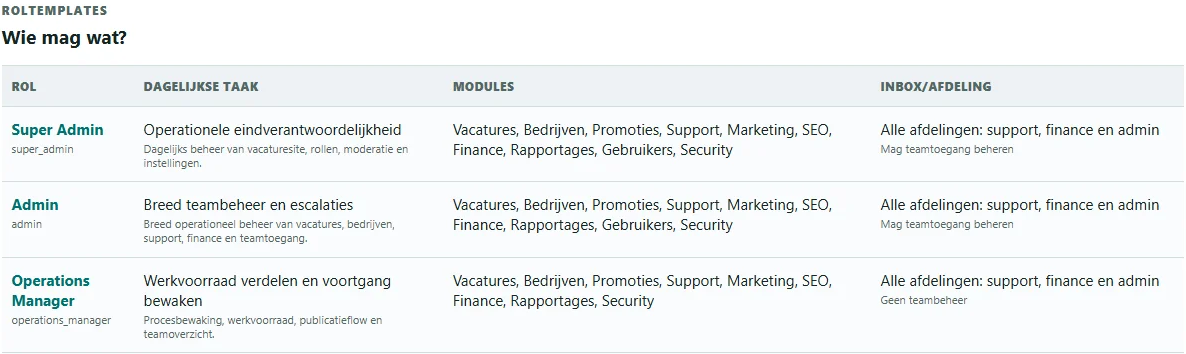
Roles and access
An example of roles and module access.
View larger image ↗